Category Archives: Uncategorized

Yapping

As most of you know, I am a member of The Church of Jesus Christ of Latter-Day Saints, formerly (and more commonly) known as the Mormon Church (the “Church”). In Church circles the past couple of weeks, there has been a lot of chatter about recent changes to the Church’s temple ceremony, which is known by its members as the “endowment.” We are instructed not to discuss certain aspects of the endowment outside the temple because of its sacred nature so I won’t go into many details here. Suffice it to say, the changes had two main purposes: (1) to shorten the time of the endowment, and (2) to remove many of the patriarchal aspects of it. Not surprisingly, the changes relating to patriarchy have garnered the most attention. Although much of this post will focus on these changes within the Church, I believe the events surrounding these changes can help us better understand how all organizations operate – a church or otherwise.

The feelings of Church members about the changes in the endowment regarding patriarchy generally fall into two categories. First, those who believe the changes came about as the result of the Church’s belief in continuous revelation. Said another way, those who think God directly told the head of the Church to make the changes. The second category is those who consider the changes to be a reaction to social pressure. I have found few things in this life to be completely black or white, so perhaps the changes occurred partly because of both reasons, but I would place much more reliance on the latter – the Church’s reaction to changing times. But I don’t think that is necessarily a bad thing. And we should welcome the changes (albeit many years later than they should have occurred) as they are changes for the better.

During my recent trip to Australia, we went to a wildlife reserve specializing in animals unique to Australia. One of my favorite parts of the sanctuary was a demonstration of the herding talents of Australian sheepdogs. These dogs, by their very nature, love to work and do so tirelessly at their job of herding sheep. The sheep, of course, do not faithfully follow the dogs to where the dogs want them to go. Instead, the dogs have to continuously run circles around the sheep, always nipping at their hooves, and gently steering them in the desired direction. To get the sheep to change directions and end up at the desired location requires patience, but in the end, the dogs successfully herd the sheep.

Sadly, an organization will not change unless it feels relentless pressure from outsiders or from the lower ranks of the organization itself. Churches, in particular, seem reluctant to change, relying on the tenet that God is the same yesterday, today, and forever. History, though, has shown that is just not true. For example, the Bible supports the practice of slavery, as it is replete with rules governing slaves, but no Christian religion today would openly support slavery. Changes, then, in most well-established organizations, typically have to be coaxed from the outside in or the bottom up, similar to how an Australian sheepdog persuades its herd to move: by yapping at its heels. 

The Church has been a patriarchal organization throughout its history. Even today, women still cannot hold the priesthood or be ordained bishops. But I give the Church credit for providing many of its faithful women positions of importance (but always under the direction of the men-only priesthood leadership. Ultimately being under the direction of that male leadership has been an issue for many women (and men) since the feminist movement began, if not sooner.

I am old enough to remember the proposed Equal Rights Amendment (the “ERA”) in the 1970s and the beginning of the crusade for equal rights for women under the law. I was in law school at this time, and some people asked me if I supported the ERA. By then, some of the longstanding laws that treated men and women differently had already started to fall, and so I answered, the ERA is important symbolically, but practically, the courts, over time would wipe out laws that supported gender discrimination. And that is what has happened.

Recently, the film, On the Basis of Sex,[i] showed how Justice Ruth Bader Ginsburg, almost single-handedly, convinced the courts to stop gender-based discrimination. But it was not easy. Here is a clip from the movie illustrating what it was like when women first started to attend law school. In short, men saw them as not much more than a novelty:

Incredibly, both Sandra Day O’Connor, the first woman on the U.S. Supreme Court, and Ruth Bader Ginsberg, the second woman on the Supreme Court, had difficulty finding jobs after graduation from law school. These difficulties seem impossible by today’s standards, as O’Connor and Ginsberg graduated respectively at the top of their classes at Stanford and Columbia. Ginsberg settled on being a law professor at Rutgers, and O’Connor started her legal career as a paralegal. Back then, it was a man’s world.

Like those Australian sheepdogs, though, Ginsberg never stopped yapping at the heels of the patriarchal society of the day. Even her husband, who was remarkably supportive of her, didn’t realize that, in Ruth’s mind, the time for change was now, not future generations: 

Ginsberg, and others like her, rejected the notion that laws treated women differently because they needed protection. Women, however, did not want that protection. They sought equality:

Through the efforts of women like Ruth Bader Ginsberg, Sandra Day O’Connor, and many, many others, the world today for women is a lot different than it was a half-century ago – not just for lawyers but in every other profession as well. And as evidenced by the recent “Me, Too” movement, there is still a ways to go before full equality and respect for women is reached. But at least we are on the right path.

Others have taken up different causes to change organizations for the better. Here are just a couple of examples:

  • Thurgood Marshall, similar to Ginsberg, was the most influential lawyer before the courts in connection with race discrimination. With Marshall leading the legal challenges, American society changed to a less biased one. Here is a scene from the film, Marshall:[ii]
  • The whistleblower, Jeffrey Wigand, a tobacco company insider, exposed the truth about the harmful effects of smoking. One of my favorite scenes from the movie, The Insider,[iii] tells the story of how a single yapping sheepdog (Wigand), changed an entire industry. Here is a link to that scene:

https://www.youtube.com/watch?v=JgNwbJTF7fY

  • My list would not be complete without honoring the men and women of the Boston Globe’s Spotlight team whose doggedly, persistent, investigative reporting broke the shroud of secrecy regarding Catholic priest abuse. Here is the closing scene of the movie, Spotlight:[iv]

The Church has had its instances of sexual abuse, although perhaps not to the same extent as that which occurred in the Catholic Church. But through the sheepdog efforts of Sam Young, hundreds of stories of pastoral abuse and shaming by Church leaders have been compiled and made public. Young’s efforts led the Church to make some small improvements in how private interviews are handled, especially with youth, but there is more work to be done. And Sam promises to continue to yap at the heels of the Church until it makes other vital changes.

But this post especially honors a small band of women in the Church – those women, acting as sheepdogs, who have encouraged the Church from the inside to make changes toward gender equality. Here are a few examples of these women:  

  • Church historian, Dr. Claudia L. Bushman, defines a feminist as someone who believes that “all of the talents and abilities of women should be developed for the benefit of themselves, their families and their communities.” If that is what a feminist is, count me in. And every man, woman, or child, based on that definition, should be a feminist, too.
  • Beverly Campbell, who wrote the entry on Eve in the Encyclopedia of Mormonism, points out, that part of the negative stereotype of Eve (and women in general because of Eve) comes from Genesis calling her a “help meet” for Adam, which we often misunderstand as being synonymous with a “servant.” But Campbell goes on to say the Oxford English Dictionary defines “help meet” as “even with or equal to.” Or as Campbell would retranslate Genesis 2:18: “It is not good that man should be alone; I will make a majestic, saving power, equal with him, to be his companion.”
  • Therapist, Dr. Julie Hanks, tells of a Church bishop who, one Sunday, got up at the beginning of sacrament meeting and excused one of his counselors from sitting on the stand. He was sitting in the pews with his children because his wife was sick at home. Dr. Hanks then points out that not once in any sacrament meeting was the bishop’s or either of his counselor’s wives acknowledged for sitting alone with their children week after week while their husbands sat on the stand. Why? Because women are expected to perform the bulk of what Hanks calls the “invisible labor” required for maintaining relationships. Men expect women to perform this invisible labor, whether a woman is good at it or enjoys it, and regardless of their church callings or whether they work outside the home. Hanks then concludes, “One of the best ways we can strive to move toward true equality, toward partnership in relationships, is to recognize, to celebrate, and take on the invisible labor that women across different ages and cultures so often carry the responsibility of performing.”
  • Author and poet, Carol Lynn Pearson, sums it up this way, “We may say we value women, but what we mean is we love their service, we want their sacrifice. [But] [w]e don’t want their wholeness and their perspectives and their humanity. Being treated with politeness, consideration, even respect is different from being treated as an equal.” Pearson continues, saying that enjoying a real partnership as husbands and wives, as men and women, might require a paradigm shift in our attitudes toward each other. She describes that paradigm shift as follows:

“Long ago, humanity shifted scientific theory from … the earth at the center of the solar system to … the sun at the center of the solar system. I yearn for the paradigm shift that moves the male-female relationship theory from the patriarchal system ([with] the male at the center of the universe with female orbiting around him) to the partnership system ([with] male and female dancing in perfect balance at the center of the universe). No one is personally harmed by the fiction that the earth is the center point of everything, but this other fiction – the fiction that maleness is central and femaleness auxiliary – this affects the daily life of every woman and every man that it touches and leaves us disoriented, many of us displaced and disheartened, and some of us seriously abused.”

Perhaps with the new changes to the Church temple ceremony, that paradigm shift is at least starting to occur. I, for one, hope that it is and that the changes continue.

I am grateful to women such as these, and many, many others, who were not afraid to take a stand and speak up for what they believed in. And like those loveable Australian sheepdogs, are willing to put in the tireless work and have the patience to help bring about change for the better.

May we all have the courage to yap when it’s appropriate.


[i] On the Basis of Sex:

  • Production Companies: Amblin Partners, Participant Media, and Robert Cort Productions
  • Director: Mimi Leder
  • Screenwriter: Daniel Stiepleman
  • Starring: Felicity Jones, Armie Hammer, and Justin Theroux
  • Release date: January 11, 2019

[ii] Marshall

  • Production Companies: Chestnut Ridge Productions, China Wit Media, and Starlight Culture Entertainment Group
  • Director: Reginald Hudlin
  • Screenwriters: Michael Koskoff and Jacob Koskoff
  • Starring: Chadwick Boseman, Josh Gad, and Kate Hudson
  • Release date: October 13, 2017

[iii] The Insider

  • Production Companies: Touchstone Pictures, Forward Pass, and Blue Lion Entertainment
  • Director: Michael Mann
  • Screenwriters: Marie Brenner and Eric Roth
  • Starring: Russell Crowe, Al Pacino, and Christopher Plummer
  • Release date: November 2, 1999

[iv] Spotlight

  • Production Companies: Participant Media, Anonymous Content, and Rocklin/Faust
  • Director: Tom McCarthy
  • Screenwriters: Josh Singer and Tom McCarthy
  • Starring: Mark Ruffalo, Michael Keeton, and Rachel McAdams
  • Release date: November 20, 2015

God, Bless Us, Everyone

One of my favorite holiday traditions is to attend the annual interpretation of Charles Dickens’ A Christmas Carol, performed by the Tony award-winning Dallas Theater Center. The basic story is always the same one we are all familiar with, but each year there are a few twists. This year, for example, the Ghost of Christmas Past was Scrooge’s mother, who died while giving birth to Ebenezer. That small twist brought new meaning to Scrooge’s Christmas experiences growing up. And as usual, Tiny Tim tugged on my heartstrings, especially, near the end, where he comes to Scrooge after his visitations from the apparitions and, singing acapella, starts a mash-up of the songs, No Man is an Island and The First Noel. That number alone is well worth the price of admission.

Of course, everyone remembers Tiny Tim’s simple prayer, “God, bless us, everyone.” It is a prayer I wish God would answer, but does not – at least in the way I hope God would answer. I admit it. Throughout my life, I have struggled with prayer. Does God hear and answer my prayers? It sometimes seems he (or she) answers some of my prayers, but not others. I know, you’re saying to yourself, that Ludlow guy is an idiot. God answers all prayers, just not the way he wants God to answer them. In other words, “no” is also an answer. But to me, God can be entirely random when it comes to answering prayers. We sometimes acknowledge God for answering insignificant prayers, like finding our car keys, but we can’t seem to discern God’s answers to prayers regarding poverty, disease, war, human trafficking, or comfort in times of tragedy. Sometimes we pray for the healing of a loved one and God responds with a miracle. But for others, the miracle never comes.

Maybe God’s answers are not really so random. Perhaps God sees how answering our prayers a certain way can negatively affect someone else, so he refuses to intervene. I smile when I see competitors on rival sports teams pray for a win. Are the Dallas Cowboys God’s favorite? More seriously, during World War II, soldiers on both sides prayed to the same Christian God for victory. I cringe every time I watch this scene from Patton.[i] Would God bless the Allies with good weather so they can do a better job of killing their enemy?

Why do we even bother to pray? We are taught by scripture that God knows what we need even before we ask. And since God’s answers seem, at times, to be so random, what’s the use? Are we wasting our time then? Should we sit back and let God do his thing, fearing our prayers will have little impact on the outcome? I learned many years ago the answers to my prayers for things to happen the way I wanted them to happen rarely worked. So, I changed the emphasis of my prayers to less about what I wanted to happen and more about, regardless what happens, please give me the strength to get through a given situation, and let me learn from the experience. At least with those prayers, I am rarely disappointed.

Sometimes we pray to show our devotion to God. But often it is less about devotion to God and more about loyalty to a particular religion. Here is a scene from Vertical Limit[ii] which help illustrates this point:

I have learned that, while showing gratitude and devotion to God through prayer can be significant, prayer is more about us than about God. I hope you don’t consider that blasphemous. But prayer is one of the few times, if we do it right, where we undergo some serious introspection and reflection and determine what we are really thankful for, and what is essential in our lives. In short, it helps us focus on our values. It helps us realize what we need to do to be better individuals, better family members, and better members of society. I have also noticed, when people lose their faith in a God they once believed in, they often turn to meditation. And when you think about it, meditation and prayer often serve that same function of introspection, reflection, value determination, and change.

But for me, my prayers and meditation are not very useful. I have struggled to understand why that is, and I have learned much about my lack of spirituality from watching movies. For example, I first saw the film, Shenandoah[iii] when I was twelve, but I still remember this prayer:

When we make our prayers or mediations all about us and our accomplishments, we see no reason or need for improvement. Growing up, my parents called that a lack of humility. Today, we more often use the term vulnerability. If we are not vulnerable enough to see our mistakes and weaknesses, we don’t give deity (or even our own souls) much chance to reveal (or discover) our best selves.

Along with that same line of thought, if we focus our prayers or meditations only on ourselves, we will find very little spiritual enlightenment. I love this scene from Election[iv] where three candidates offer three separate prayers, but each in their way, are self-focused:

I find that when my prayers or meditations are more about blessing or helping others, I have a higher chance of feeling some spiritual enlightenment in return. And that spiritual enlightenment is usually in the form of what I can do to ease someone’s suffering, or help someone through a bad situation. In short, I often can, at least partially, be the answer to my own prayer or meditation and help be the miracle in someone else’s life.  

Occasionally in the past, I had determined to have a soul-searching, deeply contemplative prayer, when a loved one or I was facing a particular challenge. To my dismay, I found that in most of those times, my efforts seemed like a disaster. My mind kept wandering, and I received no particular spiritual enlightenment. My prayers, although personal, often went something like this scene from Talladega Nights:[v]

Perhaps finding a quiet place might help. A friend of mine suggests we take a notebook and make notes before we begin our prayer or meditation, and let those notes help us keep our focus. Perhaps making notes of our feelings and impressions while we pray or meditate can also keep us on track. The point is, find something that works for you and stick to it. And long prayers or meditations are not necessarily the best. I served a church mission to Australia many years ago. On my first night there, my companion and I knelt at our beds after a long day, and each of us began a silent, personal prayer. I gave thanks for everything I could think of and asked God to bless me and everyone I loved. It was one of the longest prayers I had ever offered. I finished and got in bed. My companion remained on his knees. I kept waiting for him to finish, but he kept going and going. I soon started to panic a little, thinking, if to be a successful missionary required long prayers like my companion’s, I was doomed. My fear, though, soon turned to smiles as I heard my companion start to snore, asleep on his knees with his head in his pillow.

Finally, we don’t need to get caught up in the words of our prayers or mediations, as this prayer from Meet the Parents[vi] illustrates:    

The important thing is to determine what is in our hearts and just let that come out.

This post indeed is one of “do as I say, not as I do,” as prayer and meditation are not my strong suits. But I believe that prayer, like meditation, is more important for the person who is doing the praying or mediating than for anyone that might be listening – God or otherwise. I hope each of us can experience spiritual enlightenment often, and through that enlightenment, we make ourselves and those around us better.

Such a quest for spiritual enlightenment might be a New Year’s resolution worth keeping the whole year.   


[i] Patton

  • Production Company: Twentieth Century Fox
  • Director: Frank Schaffner
  • Screenwriters: Francis Ford Coppola and Edmund H. North
  • Starring: George C. Scott, Karl Malden and Stephen Young
  • Release date: April 2, 1970

[ii] Vertical Limit

  • Production Companies: Columbia Pictures, Global Entertainment Productions, and Mountain High Productions
  • Director: Martin Campbell
  • Screenwriter: Robert King
  • Starring: Scott Glenn, Chris O’Donnell and Bill Paxton
  • Release date: December 8, 2000

[iii] Shenandoah

  • Production Company: Universal Pictures
  • Director: Andrew V. McLaglen
  • Screenwriter: James Lee Barrett
  • Starring: James Stewart, Doug McClure, and Glen Corbett
  • Release date: June 29, 1965

[iv] Election

  • Production Companies: Bona Fide Productions, MTV Films, and Paramount Pictures
  • Director: Alexander Payne
  • Screenwriter: Alexander Payne (based on the book by Tom Perrotta
  • Starring: Matthew Broderick, Reese Witherspoon, and Chris Klein
  • Release date: May 7, 1999

[v] Talladega Nights

  • Production Companies: The Legend of Ricky Bobby: Columbia Pictures, Relativity Media, and Apatow Productions
  • Director: Adam McKay
  • Screenwriters: Will Ferrell and Adam McKay
  • Starring: Will Ferrell, John C. Reilly, and Sacha Baron Cohen
  • Release date: August 4, 2006

[vi] Meet the Parents

  • Production Companies: Universal Pictures, DreamWorks, and Nancy Tenenbaum Films
  • Director: Jay Roach
  • Screenwriters: Greg Glienna and Mary Ruth Clarke
  • Starring: Ben Stiller, Robert De Niro, and Teri Polo
  • Release date: October 6, 2000

Gifts We Can All Give

Almost everyone thinks Christmas is too commercialized these days, but no one knows what to do about it. Once we get started, we can’t seem to stop; we keep piling on Christmas present after Christmas present until we have busted our budgets (if we even had a budget to begin with). So, I got thinking about how to make Christmas different this year and came up with this crazy idea. Maybe my kids and grandkids, at our annual extended family Christmas party, should exchange only homemade, do-it-yourself, presents that cost little or no money. (Of course, each of my adult children and their families could also have a “normal” Christmas with lots of presents under the tree and the annual visit from Santa.)

To determine how feasible my idea might be, I searched for possible gifts of that type, hoping I could find something cool that would fit the requirement – and one that I could make myself. I soon gave up on the idea. First, there is nothing I could make that any of my grandkids would think was cool, no matter how well I made it. Second, I have no skills in the area of crafts, as I am not particularly good with my hands (which is one reason I became a lawyer). Finally, I determined that I could find better, more productive, uses of my time (like going to movies!) than the hours it would take for me to make do-it-yourself presents. Besides, since my grandkids get so much each Christmas, they often ignore my gifts after a week or two. I might as well take the easy way out and just buy them something. Quick and easy. Perfect. Merry Christmas!

After Thanksgiving, though, I started one of my annual Christmas traditions. I started listening to my favorite Christmas music. As it always does, soon the music put me into the real Christmas spirit – you know, the Christmas spirit that focuses on Christ, love and the true spirit of giving. So, I started thinking a little deeper of the best gifts that anyone could give – not just on Christmas, but throughout the year. Here, then, are five Christmas gifts that won’t cost you anything but some commitment and awareness, as exemplified by the life of Christ, and illustrated by some of my favorite films. And whether we are Christian, Non-Christian, agnostic or atheist, we would do well to follow these examples of Christ. And whether you believe these events about Jesus actually occurred or are just myths, the principles they teach are worthy of emulation.     

The Gift of Change: We often want to change the world, but we don’t know how to do it. Christ did it dramatically, taking on the current philosophy of his day and turning it on its head. He changed an eye for an eye into turning the other cheek. He turned love your neighbor, but hate your enemy, into love your enemies, bless them that curse you, and do good to those that hate you. He changed the importance of outward appearances into it’s more important what you are like on the inside.

Sadly, we are still trying to incorporate the lessons of love he taught. So, if someone so admired and followed as Christ cannot change the world after 2000 years, how can we expect to bring about any meaningful change? The answer is simple. First, as illustrated by this clip from Evan Almighty,[i]we change the world by one act of random kindness, and watch it ripple out to others: 

In Bruce Almighty,[ii] God gives Bruce Nolan (played by Jim Carrey) the chance to see what it’s like to be God. He soon realizes it is not so easy. After the chaos he causes gets under control, the real God teaches him a great lesson about miracles. If we want a miracle to occur, the best way is for us to be the miracle:

More often than not, if our prayers or pleas are answered, it is through the efforts of those around us. Let’s be a miracle in the lives of others, whether family, friend or a total stranger. And it doesn’t have to be something monumental. As 18th-century essayist, William Hazlitt, reminds us, “A gentle word, a kind look, a good-natured smile can work wonders and accomplish miracles.” By doing so, we can change the world – at least the world around us – for the better.

The Gift of Appreciation: Studies reveal that we are happier when we express our gratitude to others. But we not only need to say it, we need to show it by the things we do, or as John F. Kennedy said it, “As we express our gratitude, we must never forget that the highest appreciation is not to utter words, but to live by them.” I love this thought by Voltaire: “Appreciation is a wonderful thing: It makes what is excellent in others belong to us as well.” Don’t you find that to be the case? When we express genuine appreciation to someone, we create a special bond between them and us.

Unfortunately, those we should appreciate the most are those we often take for granted. This clip from The Break-Up[iii]illustrates this point well:   

Jesus taught the importance of appreciation. One of my favorite examples is the story of the healing of the ten lepers. These men, of different nationalities, now companions by necessity, asked Jesus to have mercy on them. Christ instructed them to show themselves to the priests, for without being pronounced clean by a priest, they could not return to life within the community. As they went, all ten were miraculously healed. But only one turned back to Jesus to offer thanks. Pained over the lack of gratitude on the part of the other nine, Jesus lamented, “Were there not ten cleansed? But where are the nine?” While no doubt the other nine were healed by following the letter of the law by going to the priests, their lack of gratitude stands in sharp contrast to the spirit of the one who gave thanks, even though the one who gave thanks was a Samaritan, whom the Jews considered far inferior to themselves. None of us are so important that we forget to give thanks to anyone who does something for us.

How can we learn to be more appreciative of others? Here is an excellent suggestion from Dr. Wayne Dyer: “Give yourself a gift of five minutes of contemplation in awe of everything you see around you. Go outside and turn your attention to the many miracles around you. This five-minute-a-day regimen of appreciation and gratitude will help you to focus your life in awe.” Perhaps at the end of each day, we could take those five minutes and list the things we are grateful for that occurred that very day. But don’t just list them. Take an extra few minutes to make a phone call, write a letter, or send a text or email expressing your thanks. But don’t even stop there. Determine that tomorrow you will pass it on by doing something similar to someone you encounter that day.

The Gift of Encouragement: If I have learned anything from my life so far, it’s that we can’t live a happy, rewarding life alone. We need connections with others. Or, as the song goes, no man is an island. That is not to say that the more friends we have the happier we will be, but everyone needs at least a small group of family or friends who care and encourage each other. There are times in each of our lives when we experience doubt, tragedy, and just plain hard times. It is times like that where encouragement can make all the difference – where we reach the point where we can’t do any more on our own and someone rallies around us, encourages us and helps us to keep going. I love this clip from For Love of the Game:[iv]

One of my favorite Bible stories growing up was when Jesus walked on water. I mean, how cool would that be? When his disciples first saw him walking on water, they were frightened, thinking he was a ghost. But Jesus called to them, assuring them it was him. Peter then did the unthinkable. He asked Jesus to allow him to walk to him. When Christ encouraged him to do so, Peter left the ship and started walking on water toward Jesus. A moment later, when he realized what he was doing, Peter began to sink. But Jesus reached down to catch him and pull him to safety. I doubt any of us have ever walked on water, but through encouragement from loved ones, we can do impossible things. And if we start to stumble and fall, how wonderful to have an encouraging friend or family member there to catch us and lift us up! As author, Yehuda Berg, said, “Words are singularly the most powerful force available to humanity. We can choose to use this force constructively with words of encouragement, or destructively using words of despair. Words have energy and power with the ability to help, to heal, to hinder, to hurt, to harm, to humiliate and to humble.” Let’s make sure our words only encourage, help, and heal.

The Gift of Compassion: To have compassion is to have a deep feeling of empathy for one who is struggling. And with that empathy, we want to do all we can to alleviate that person’s suffering and despair. The Dalai Lama said, “Love and compassion are necessities, not luxuries. Without them, humanity cannot survive.” Said another way, to lose our compassion, is to lose what it means to be human. How do we begin to show compassion? We start by applying this Amish proverb: “Instead of putting others in their place, put yourself in their place.” By doing that, we begin to understand what someone is going through, and with that understanding, we not only can help, but we want to help ease the pain, the anxiety, the suffering. Here is a simple example of compassion from the film, Schindler’sList:[v]

Jesus Christ was nothing if not compassionate. Every story of a miracle healing began with compassion. He had compassion on the multitude of his followers who were hungry when he fed them all with a few morsels of bread and fish. He showed compassion when he promised the thieves with whom he shared crosses that they would be with him in paradise. When it comes to our relationship with others, a little compassion goes a long, long way

The Gift of Forgiveness. Dr.Martin Luther King Jr. said, “We must develop and maintain the capacity to forgive. He who is devoid of the power to forgive is devoid of the power to love.” Often, I find it hard to forgive those I should be the most willing to forgive – my family and friends. But sometimes I find it harder still to forgive myself. Even though it might be hard, we must learn to forgive so we can move on with our lives. Or as radio personality, Bernard Meltzer, said, “When you forgive, you in no way change the past – but you sure do change the future.” The converse is also true. If we are unwilling to forgive, we remain mired in the past we can do nothing to change. As this scene from Shrek[vi] illustrates, isn’t forgiveness one of the marks of a true friend? To forgive us – whether or not we deserve it:

Jesus Christ was a marvelous example of forgiveness, and he taught us valuable lessons about it. If we do not forgive others, how can we expect others to forgive us? When Peter asked how often should he forgive another who had sinned against him, Jesus answered seventy times seven, or in other words, always. Even while on the cross, Jesus asked his father to forgive his persecutors. Following that example, then, let’s forgive those who wrong us, remembering that forgiveness is just as important to the person doing the forgiving as it is for the person in need of forgiveness.

I wish everyone a happy holiday season. By giving the gifts of change, appreciation, encouragement, compassion, and forgiveness, not just on Christmas Day but throughout the year, every year, we will be giving some of the best gifts we can give.


[i] Evan Almighty

  • Production Companies: Universal Pictures, Spyglass Entertainment, and Relativity Media 
  • Director: Tom Shadyac
  • Screenwriter: Steve Oedekerk
  • Starring: Steve Carell, Morgan Freeman, and Lauren Graham
  • Release date: June 22, 2007

[ii] Bruce Almighty

  • Production Companies: Spyglass Entertainment, Universal Pictures, and Shady Acres Entertainment
  • Director: Tom Shadyac
  • Screenwriters: Steve Koren and Mark O’Keefe
  • Starring: Jim Carey, Jennifer Aniston, and Morgan Freeman
  • Release date: May 23, 2003

[iii] The Break-Up

  • Production Companies: Universal Pictures, Mosaic Media Group, and Wild West Picture Show Productions
  • Director: Peyton Reed
  • Screenwriters: Jeremy Garelick and Jay Lavender
  • Starring: Jennifer Aniston, Vince Vaughn, and Jon Favreau
  • Release date: June 2, 2006

[iv] For Love of the Game

  • Production Companies: Universal Pictures, Beacon Pictures, and Tig Productions
  • Director: Sam Raimi
  • Screenwriter: Dana Stevens (based on the book by Michael Shaara
  • Starring: Keven Costner, Kelly Preston, and John C. Riley
  • Release date: September 17, 1999

[v] Schindler’s List

  • Production Companies: Universal Pictures and Amblin Entertainment
  • Director: Steven Spielberg
  • Screenwriter: Steven Zaillian (based on the book by Thomas Keneally
  • Starring: Liam Neeson, Ralph Fiennes, and Ben Kingsley
  • Release date: February 4, 1994

[vi] Shrek

  • Production Companies: DreamWorks Animation, DreamWorks, and Pacific Data Images (PDI)
  • Directors: Andrew Anderson and Vicky Jenson
  • Screenwriter: William Steig (based on the book by Ted Elliott)
  • Starring: Mike Myers, Eddie Murphy, and Cameron Diaz
  • Release date: May 18, 2001

Family is Where You Find It

Someone once said, parenthood requires love, not DNA. In other words, genes do not define good families. Instead, they are built, from the ground up, upon love, caring, and mutual respect and acceptance among family members.

At Thanksgiving, our thoughts often turn to family. I am thankful for mine. I have a wonderful family that is built upon love, caring, and mutual respect and acceptance. Some, though, are not so lucky. As of September 30, 2016 (the latest date for which I could find statistics), there were 437,465 children in foster care in the United States. And each year, for at least the past five years, that number has increased. Although foster care affects all ethnic backgrounds, almost half of the foster children in America are white, while about one-fifth each is African-American and Hispanic. Interestingly, only about one percent of foster children are Asian.

There are multiple reasons why a child must enter the foster care system, but of those in the system in 2016, 61 percent (or 166,679 children) was due to neglect by their parents, 34 percent (or 92,107 children) was due to drug abuse by a parent, and 12 percent (or 33,671 children) was due to physical abuse by a parent. If you are good with numbers, you have already realized the percentages in these three categories alone surpass 100 percent, meaning most children who end up in foster care experience more than one cause. For example, drug abuse by a parent might lead to both neglect and physical abuse.

Two recent events emphasized these disturbing facts to me, but also give me hope that things can get better. First, on November 9th of each year, we celebrate National Adoption Day. If you even knew about the day enough to celebrate it, you might have done this with your hand:

A smiley face drawn on your palm is the symbol of National Adoption Day. And this past November 9th marked the one-year anniversary of the day our family adopted our grandson, Dax. But first, here is a short video about how National Adoption Day came to be and what it’s all about:

Second, I recently watched the film, Instant Family,[i]inspired by the movie’s writer/director’s own experiences with fostering and adopting three siblings. It is a touching story that will make you laugh, cry, and appreciate what foster parents do, and will help you get into the Christmas spirit. Here is a peek at the family who inspired the film, interspersed with a few scenes from the movie:  


One of my favorite lines from Instant Familygoes like this: “Ellie, people who take in foster kids are really special. They’re the kind of people who volunteer when it’s not even a holiday. We don’t even volunteer on a holiday.” My son and daughter-in-law, Scott and Lauren, are special like that. A few years back, they already had four children of their own but felt like their family was somehow incomplete. Rather than have another of their own, and after discussing it with their other children (for fostering needs to be a complete family effort), they decided to take in a child. That brought Dax into our lives.

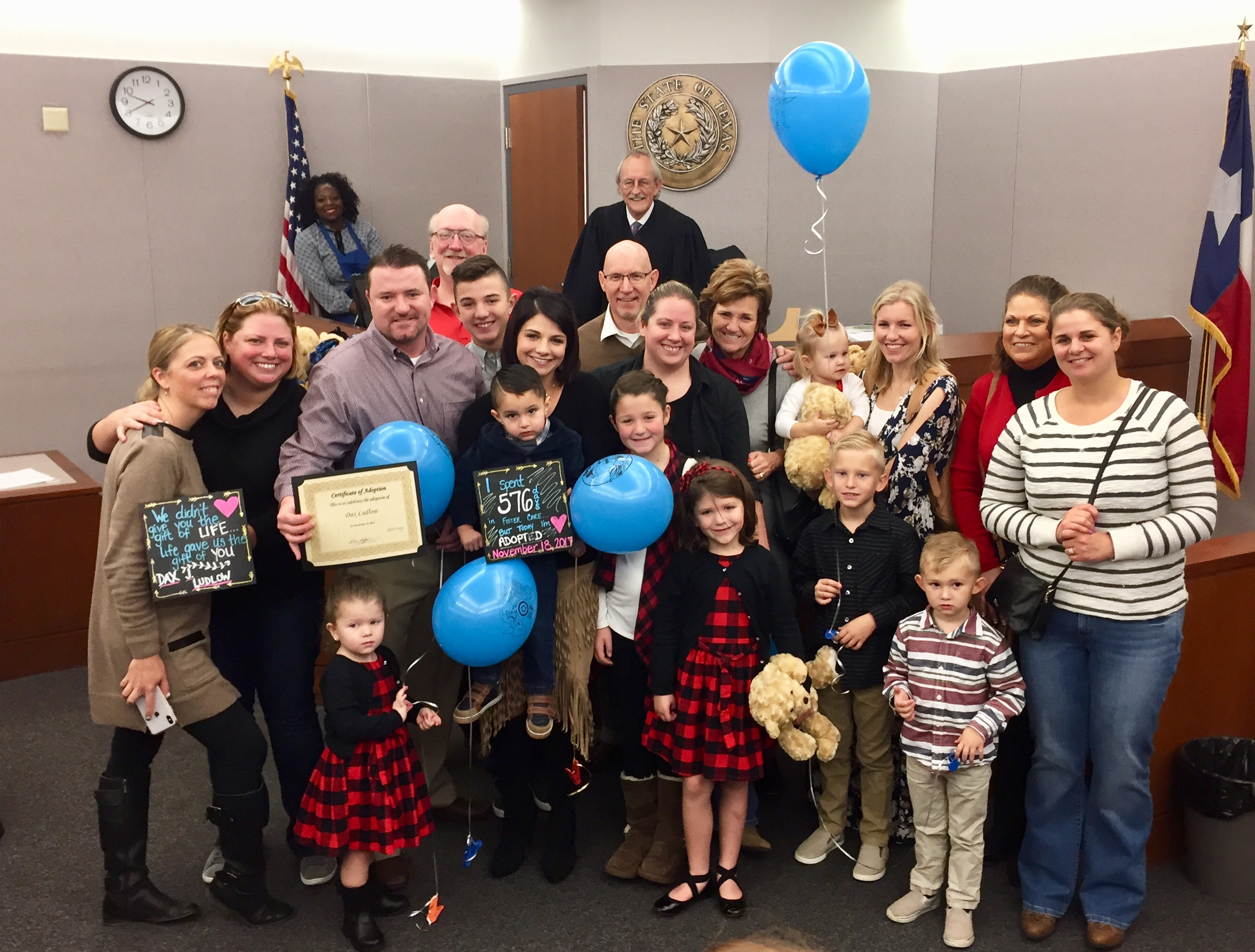
Dax’s mother was a drug addict, and there were signs his father had physically abused him. When he first came into Scott’s and Lauren’s home, Dax wouldn’t go near Scott. That was hard on everyone. Although regardless of the situation, adjusting to new surroundings and a new family takes time, the love for Dax came instantly. And with that love and time, Dax soon became best friends with Scott and an indispensable part of the family. Thinking about Scott and Lauren and how instantly they accepted Dax, problems and all, reminds me of what journalist, Bob Constantine, once said: “I have four children. Two are adopted. I forget which two.” To watch the interaction among Dax, his new parents, and siblings, you would never be able to tell which of the children is the adopted one. And even with adopted children, or more accurately, especially with adopted children, it takes a village of love and acceptance to make things work. Here is Dax, on the day of his adoption, surrounded by family who makes up part of his village (Dax is the little dark-haired boy between the three blue balloons):        

Although it takes a great effort of an entire extended family and friends to be successful at fostering, and with no offense to my son, Scott (who is wonderful with all his kids, and does more than his fair share of nurturing), the focal point of successful fostering most-often falls on the mother. And when I think of great foster/adoptive mothers, after Lauren, I think of Sue Brierley from the movie, Lion,[ii]the true story of an adopted son who expends great effort to find his birth family. Here is one of my favorite scenes, which emphasizes the unconditional love of a mother, even for an adopted son, and the special calling many adoptive mothers (and fathers) feel:

Or as Leigh Ann Touhy (the subject, along with her family, of the film, The Blind Side[iii]) said: “Families don’t have to match. You don’t have to look like someone else to love them.” The Blind Side is the true story of Michael Oher, a homeless African-American youth who is adopted by a white family, who are instrumental in helping him reach his full potential as a football player and a person.

Unfortunately, most foster children do not experience the happy endings that Michael Oher from The Blind Side, or Saroo from Lion, or our grandson, Dax, did. According to ABC News, on average, foster children will remain in the system for about three years before being reunited with their families or adopted. On average, a foster child will live with three different foster families, but it is not uncommon for a foster child to have been in 20 to 30 different homes over his or her short life, and many of them are separated from not only their parents but their siblings as well. It is easy to understand how unsettling the frequent moves in and out of the homes of strangers would be. But it often gets worse. In 2016, for example, 20,532 children “aged out” of the system, meaning they turned 18 without being reunited with their families or being adopted. In short, we turn them into the streets where they often end up homeless (30 percent of homeless people in America were foster kids) or in prison (25 percent of those in prison were once in foster care).

Even great foster kids can have a hard time adjusting to their new surroundings. Look what Buddy, in Elf[iv]had to face as a foster child and the pain of his realization that he is a little different:

But more seriously, when I think of what life might be like as a foster child, I think of this scene from the movie, Antwone Fisher,[v] the true story of a foster child who had been traumatized by events from his past:

Several months back, Scott, Lauren, and family took in their second foster child, Grace. Her mother’s boyfriend had physically abused her, which resulted in a fractured skull. The injury became infected, requiring the removal of a large portion of her skull. So now Grace has to wear a helmet, so she doesn’t injure her brain. She looks like this (fostering regulations require no identifying photos on social media):

Eventually, when she gets a little older, she will have a plate inserted into her head to protect her brain. But Grace is a remarkable child. For all she has gone through during her young life, she remains one of the happiest children I have ever been around. In short, she is easy to love, as she loves everyone in return. But unlike Dax, Grace came with a catch. Most-likely one day soon, Grace will be adopted by her natural grandparents. And so, Grace might not be part of our family for long. But she will be forever in our hearts. All of which makes Scott, Lauren and their family even more remarkable to me. They have opened their home and their hearts to Grace and loved her as if she were their own, even knowing they probably will be separated soon. But isn’t that one of the truest measures of love? To be able to say goodbye to someone you love when the time is right.

I tip my cap to all the caring, loving parents everywhere, but especially to those who are foster parents. As someone reminded me, foster parents don’t have superpowers, but it’s worth remembering that even Superman was adopted.


[i] Instant Family

  • Production Company: Paramount Pictures
  • Director: Sean Anders
  • Screenwriters: Sean Anders and John Morris
  • Starring: Mark Wahlberg, Rose Bryne, and Isabela Moner
  • Release date: November 16, 2018

[ii] Lion

  • Production Companies: The Weinstein Company, Screen Australia, and See-Saw Films
  • Director: Garth Davis
  • Screenwriter: Saroo Brierley (adapted from the book by Luke Davies)
  • Starring: Dev Patel, Nicole Kidman, and Rooney Mara
  • Release date: January 6, 2017

[iii] The Blind Side

  • Production Companies: Alcon Entertainment, 3 Arts Entertainment, and Left Tackle Pictures
  • Director: John Lee Hancock
  • Screenwriter: John Lee Hancock and Michael Lewis (book)
  • Starring: Quinton Aaron, Sandra Bullock, and Tim McGraw
  • Release date: November 20, 2009

[iv] Elf

  • Production Companies: New Line Cinema, Guy Walks Into a Bar Productions, Gold/MillerProductions
  • Director: Jon Favreau
  • Screenwriter: David Berenbaum
  • Starring: Will Ferrell, James Caan, and Bob Newhart
  • Release date: November 7, 2003

[v] Antwone Fisher

  • Production Companies: Fox Searchlight Pictures and Mundy Lane Entertainment
  • Director: Denzel Washington
  • Screenwriter: Antwone Fisher
  • Starring: Denzel Washington, Luke Derek, and Joy Bryant
  • Release date: January 10, 2003

You Belong in Austin

In 2001, a small oil and gas company offered me a job. The new position would require relocating from the Dallas area to Austin. The offer was not a great one financially, as it would result in a significant cut in pay, but it would be the kind of legal work I loved to do, while my current position was not. The day after I received the offer, I got in the mail the latest edition of the Texas Bar Journal. The cover looked like this:

You Belong

I took this as a sign and accepted the offer.

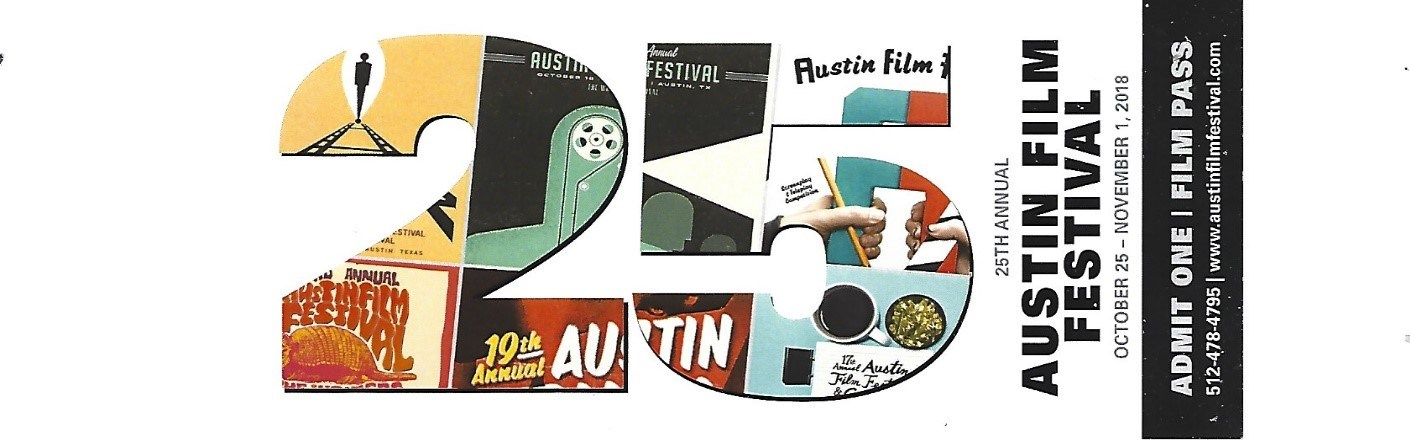
We moved back to the Dallas – Fort Worth area seven years later, but recently I confirmed once again that I belong in Austin – at least for eight days a year at this:

Film pass3

My wife and I just returned from the Austin Film Festival, where we watched 27 movies. Sadly, there were several others we wanted to see but couldn’t due to scheduling conflicts. I admit it; I’m a film junkie.

We had attended parts of the Austin Film Festival while we lived in Austin, but this was the first time we had been back to the Festival after moving back to DFW and the first time we completely immersed ourselves in it. Unlike my usual posts that focus on some character trait or ills of society, this one will focus on what I learned at this year’s Austin Film Festival.   

There is nothing like watching a film with movie people. They cry unashamedly, laugh boisterously, and cheer loudly when someone rights a wrong. They applaud at the end of every movie and stay to watch the credits.

Movie people can be some of the nicest people around. We often think of those in the entertainment industry as snobby and pretentious, and I’m sure some of them are. But the ones at the festival were not. They were friendly, humble and appreciative of others’ works. And we met some of the nicest people standing in line waiting for the next film.

Perhaps the best part of the Festival was listening to insiders from each film shown. At the end of each movie, someone (often several people) connected to the film, such as the writer, director, producer or star, held a question and answer session about the film. In these sessions, you learned what inspired the people to make the film, insights about the characters and plot, and even some of the technical aspects of making the film. I would love it if every movie had such a session. Filmgoers would appreciate the movies so much more. These sessions couldn’t be held live at every showing of every movie, but at the end of the credits, the film could conclude with a short Q and A session as part of the film itself. (And then more people would stay for the credits. I am always impressed at how many people it takes to make a movie.)  

One of my favorite parts of the Austin Film Festival was watching “shorts.” These are a group of 5 to 10 mini-movies. They are made by filmmakers trying to make a name for themselves. Shorts can be some of the most insightful and thought-provoking films around. If I were a movie distributor, I would show one of these shorts at the beginning of every movie (and in turn, cut down the previews from 20 minutes to 10 minutes). You can generally find these shorts online somewhere, often on YouTube. I have listed a few of my favorite shorts in the endnote below.[i]  

The theme of this year’s Festival was “encourage courage.” You can demonstrate courage in many ways. For example, before each film, the screen flashed the following:

  • It wasn’t until 1960 that a flushing toilet was shown on screen.
  • It wasn’t until 1964 that an interracial couple was shown on screen.
  • It wasn’t until 1969 that a naked man was shown on screen.
  • It took until 2010 for a female to win the best director Oscar.
  • Courage in film takes many forms.
  • With courage, impossible becomes I’m possible.

We saw many great films, most of which showed great courage in some way. Here are my three favorites from the “marquee” films (those that will be released soon at a theater near you). See them if you can.

The best movie at the festival was Green Book.[ii] It is based on the true story of a classical pianist, Don Shirley, an African-American, who takes a concert tour through the deep South in the early 1960s. He hires an Italian-American bouncer as his driver. It is funny, insightful and at some points, tragic. It won the Audience Award (the most popular) at the Festival. Here is the trailer from the film:

My next favorite movie was Boy Erased.[iii] It is the true story of a gay young man who goes through conversion therapy to “cure” his gayness. It demonstrates how wrong we got it back in the past (and many still don’t get it) when it comes to LGBTQ and how the love for a family member is more important than a religious belief. Here is the trailer from the movie:

One of the toughest films to watch was Ben is Back.[iv] It is the story of a young man who returns home to his family after rehab for drug addiction. It gave me insight on what drugs addiction does, not just to the abuser, but to his or her parents, siblings, friends, and former associates. And again, as in Boy Erased, it illustrated the importance of love among family members. Here is the trailer from the film:   

(Yes, Lucas Hedges stars in both Boy Erased and Ben is Back.)

Film festivals provide a sneak-peak at several movies that will soon be released (like the ones mentioned above), but their major purpose is to help independent filmmakers market their movies to movie distributors. The Austin Film Festival is known as the writers’ festival because it focuses on screenplays. The Festival puts on workshops to help screenwriters improve their craft, a chance to pitch their screenplays to industry insiders, and gives awards to the best-submitted screenplays.

Independent filmmakers submit their films to the Festival for consideration. The Festival then selects a handful from the dozens submitted for showing and awards the best ones. Here are my favorites from the competition films:

  • Favorite Narrative Film: Above the Clouds[v] – The story of a young woman who, on her 18th birthday, sets out on a road trip with a homeless man to find her birth father.
  • Favorite Documentary: The Interpreters[vi] – A documentary about how the U.S. military hired local Iraqis to be interpreters during the second Gulf War, who were largely abandoned by the U.S. after the war but were marked as traitors by their own country. This film won the Jury Award for the Best Documentary as well as the Courage Award. 
  • The Most Thought-Provoking Film: Clara[vii] – The story of an astronomer consumed with searching for intelligent life outside planet earth, and his new research assistant, Clara, an artist, who is fascinated with space. The film gets you thinking about God, the limitations of science, and just what life might be like after we die. This movie won the Jury Award for the Best Narrative Film. Amazingly, a twenty-year-old wrote and directed the movie.

Since none of these last three movies have distributors yet, sadly, they may never make it to theaters. But keep your eyes open for them if they do. Hopefully, they will at least make it to Netflix, Amazon Prime, or some other online source, as it will be worth your time to watch them.

Like the films at the Festival, let’s be courageous. We don’t have to topple governments or evil corporations or take on a drug cartel. But each of us can have enough courage to do something to make this world a little better. Let’s right a wrong, protect the victim of bullying, welcome into our inner circle someone who is different or who society has marginalized, forgive someone who has hurt us, or seek forgiveness from someone we have wronged. All of those take courage, and through that courage, we really can turn the impossible into “I’m possible.”


[i] Here are some of my favorite shorts from the Austin Film Festival:

  • The Last Letter – A war weary soldier must deliver to his dead friend’s fiancée a farewell letter that was never written.
  •  Woman in Stall – A woman finds herself trapped in a bathroom stall by a man whose intentions are not entirely clear (winner of the best student narrative short at the Festival).
  • Christmas Green – A disgruntled woman pays an unwanted visit to her lonely neighbor, but both end up finding unexpected joy in each other’s company.
  • Noise – When a young, deaf woman forms a bond with an unlikely stranger, the two are forced to communicate in the absence of language.
  • Everything Mattress – In search of a new mattress, David and Sara receive some unexpected wisdom from a mattress salesperson (winner of the Audience Award for a short).

[ii] Green Book

  • Production Companies: Participant Media, DreamWorks, and Amblin Partners
  • Director: Pater Farrelly
  • Screenwriter: Nick Vallelonga, Brian Hayes Currie
  • Starring: Linda Cardellini, Viggo Mortensen, and Mahershala Ali 
  • Release date: November 21, 2018

[iii] Boy Erased

  • Production Companies: Anonymous Content, Blue-Tongued Films, and Focus Features
  • Director: Joel Edgerton
  • Screenwriter: Joel Edgerton (based on the memoir by Garrard Conley)
  • Starring: Lucas Hedges, Nicole Kidman, and Russell Crowe
  • Release date: November 4, 2018 (limited release)

[iv] Ben is Back

  • Production Companies: Black Bear Pictures, 30West, and Color Force
  • Director: Peter Hedges
  • Screenwriter: Peter Hedges
  • Starring: Julia Roberts, Lucas Hedges, and Courtney B. Vance
  • Release date: December 7, 2018

[v] Above the Clouds

  • Production Company: Third Light Films
  • Director: Leon Chambers
  • Screenwriter: Simon Lloyd (based on the story by Leon Chambers)
  • Starring: Naomi Murton, Andrew Murton, and Phillip Jackson
  • Release date: Unknown

[vi] The Interpreters

  • Production Company: Capital K Pictures
  • Directors: Andres Caballero and Sophian Khan
  • Release date: Unknown

[vii] Clara

  • Production Company: Serendipity Point Films
  • Director: Akash Sherman
  • Screenwriter: Akash Sherman
  • Starring: Patrick J. Adams, Troian Bellisario, and Will Bowes
  • Release date: Unknown

Shedding Our Shame

A few weeks ago, while discussing some of our experiences, one of my sons commented that he didn’t think I had ever done anything seriously wrong. Rather than accept the compliment, I denied it and gave him a couple of examples of mistakes I had made in the past. My son merely laughed those off as insignificant. But, of course, I couldn’t (or at least wouldn’t) relate to him some of my much darker secrets. Why? Because I am too ashamed to admit those publicly.

The title of this post is Shedding Our Shame, not True Confessions, so if you are hoping to learn of my deepest secrets, get over it. It’s not going to happen. But that discussion with my son, as well as reading Tara Westover’s memoir, Educated,[i] got me thinking about how guilt and shame can either help us or harm us.

Tara Westover had an interesting childhood, to say the least. She was psychologically and sometimes physically abused by her parents and siblings. She ultimately walked away from them, but felt guilty about that, even though she believed she was justified in doing so because of the abuse. After many years of struggling with the guilt from abandoning her parents, she concluded:

“But vindication has no power over guilt. No amount of anger or rage directed at others can subdue it, because guilt is never about them. Guilt is the fear of one’s own wretchedness. It has nothing to do with other people. I shed my guilt when I accepted my decision on its own terms, without endlessly prosecuting old grievances, without weighing his [her father’s] sins against mine. Without thinking of my father at all. I learned to accept my decision for my own sake, because of me, not because of him. Because I needed it, not because he deserved it.”

Like forgiveness, then, shedding ourselves of guilt is much more important for our own wellbeing than the wellbeing of the person we harmed.

What causes guilt or shame in us? Religion teaches us that we should feel guilt (remorse) when we sin because we have disappointed God. Perhaps this is how Red felt in The Shawshank Redemption,[ii] as he relates his feelings about the crime he committed 40 years ago:

But I think Red felt his guilt for reasons other than just displeasing God. I feel the most-guilty when my actions or inactions have hurt someone else. God, for me, is not always a huge part of it.

Sometimes our actions can hurt others even though we had no intention of doing so. Many years ago, I had a friend who, on a business trip, intentionally ran a stop sign because he was late for a meeting with a client.

He did not see the car coming the other way.

The impact of the crash caused a new-born to be thrown from the car, killing her instantly. Her parents were bringing their brand-new baby home from the hospital for the first time. Meeting with my friend after that accident was gut-wrenching. I witnessed first-hand pain, torment, suffering, grief, and guilt all rolled into one. The family of the infant was remarkably understanding, holding no grudges. But I didn’t know how my friend could ever get over that. I’m not sure I ever could. Perhaps Ron Kovic, in the film about his life, Born on the Fourth of July[iii] felt similarly:

“War is hell,” as General Patton once said, and bad things, even unintentional ones, regularly happen in war. But how would we feel if we chose one course of action because of political or financial implications and that course led to the death of a child? That is what Chief Martin Brody had to live with in Jaws:[iv]

 We sometimes use guilt and shame interchangeably, but I like the difference research professor, Dr. Brené Brown, makes:

“I believe that there is a profound difference between shame and guilt. I believe that guilt is adaptive and helpful – it’s holding something we’ve done or failed to do up against our values and feeling psychological discomfort.

“I define shame as the intensely painful feeling or experience of believing that we are flawed and therefore unworthy of love and belonging – something we’ve experienced, done, or failed to do makes us unworthy of connection.

“I don’t believe shame is helpful or productive. In fact, I think shame is much more likely to be the source of destructive, hurtful behavior than the solution or cure. I think the fear of disconnection can make us dangerous.”

Or as Christian theologian, Lewis B. Smedes, succinctly summarizes it, “We feel guilty for what we do. We feel shame for who we are.”

The ending of Saving Private Ryan[v] shows us how guilt can direct our lives. In this scene, Ryan, now an old man, visits the grave of one of the men who gave his life so Ryan could live:

 Using the motivation of survivor’s guilt, Ryan lived the best life he could. That guilt helped him be a better man. But we shouldn’t have to experience guilt every day for the rest of our lives. We need to learn from our mistakes, make a course correction, if necessary, and move on.

Contrast the scene from Saving Private Ryan with this scene from The Breakfast Club,[vi] where Andrew Clark feels the shame heaped upon him by his dad about the importance of winning, and turns those feelings of inadequacy into destructive actions to himself and others:

Admittedly, I am not a trained therapist, but from my experience, we need to be careful how we treat others, so we don’t push the remorse someone feels from making a mistake into shame for being a flawed person. As parents, do we correct the errors our children make? Or do we tell them they are bad? When we bully another person, aren’t we telling them that they are no good? As teachers (formal or otherwise), do we label our students in such a way that we tell them they are just plain dumb? As Christians, are we so obsessed with being a sinner, the need for strict obedience to every commandment, and our hopeless plight if we fail to accept the Savior, that we shame our fellow congregants?

Perhaps more importantly, what do we tell ourselves about ourselves? The more we tell ourselves how wretched we are, the more we believe it. And that belief will almost always become our reality. And a reality of shame can only lead to destructive behavior, sometimes even suicide.

Author Sue Thoele said, “I believe one of our souls’ major purposes is to know, love, and express our authentic selves. To live the life and be the person we were created to be. However, our true selves only emerge when it’s safe to do so. Self-condemnation, shame, and guilt send your true nature into hiding. It’s only in the safety of gentle curiosity, encouragement, and self-love that your soul can bloom as it was created to do.”

Let’s help create for others that safe place where a person can correct mistakes along the way but where their true, beautiful selves are allowed to emerge and develop.

And let’s do the same for ourselves. Regardless of what we have done or failed to do, each of us is a person of worth. Despite our past, each of us can have a bright future if we will only shed our shame.


[i] Educated, by Tara Westover, Random House, copyright 2018

[ii]The Shawshank Redemption

  • Production Company: Castlerock Entertainment
  • Director: Frank Darabont
  • Screenwriter: Frank Darabont (based on a short story by Stephen King)
  • Starring: Tim Robbins, Morgan Freeman, and Bob Gunton
  • Release date: October 14, 1994

[iii] Born on the Fourth of July

  • Production Company: Ixtlan
  • Director: Oliver Stone
  • Screenwriter: Oliver Stone (based on the book by Ron Kovic)
  • Starring: Tom Cruise, Raymond J. Barry, and Caroline Kava
  • Release date: January 5, 1990

[iv] Jaws

  • Production Companies: Zanuck/Brown Productions and Universal Pictures
  • Director: Steven Spielberg
  • Screenwriters: Peter Benchley and Carl Gottlieb
  • Starring: Roy Scheider, Robert Shaw, and Richard Dreyfuss
  • Release date: June 20, 1975

[v] Saving Private Ryan

  • Production Companies: DreamWorks, Paramount Pictures, and Amblin Entertainment
  • Director: Steven Spielberg
  • Screenwriter: Robert Rodat
  • Starring: Tom Hanks, Matt Damon, and Tom Sizemore
  • Release date: July 24, 1998

[vi] The Breakfast Club

  • Production Companies: Universal Pictures, A&M Films, Channel Productions
  • Director: John Hughes
  • Screenwriter: John Hughes
  • Starring: Emilio Estevez, Judd Nelson, and Molly Ringwald
  • Release date: February 15, 1985


Where is the Love?

In this blog, I usually stay away from controversial religious and political issues and focus more on simple life lessons. But I can’t help myself in this post. In doing so, at the outset, I apologize if I offend anyone, but before casting stones in my direction, please at least read through it completely and ponder on it for a moment.

As most of you know, my parents raised me in the Mormon church, although we can’t call it the Mormon church anymore because the church’s top leader now tells us that to refer to the church as “Mormon” or its members as “Mormons” offends God. To avoid offending anyone, especially God, I will refer to the church formerly known as Mormon simply as “the Church.”

The Church has conferences twice a year where we listen to our top leaders. Many talks are uplifting and inspire us to be better people. Some, not so much. One, in particular, this last conference left me cold. The speaker, formerly a prominent lawyer and judge, presented his message lawyerly, which, as a lawyer, I should have appreciated. Instead, I kept asking myself, where is the love for these people at whom he was, at least indirectly, casting stones? His message was simple: in the Church, we believe marriage between a man and a woman (as opposed to two men or two women) is ordained of God, and gender is eternal. Thus, the underlying message was, if you are LGBTQ and act on those desires, you commit serious sin – a sin which is next to murder in seriousness in the eyes of the Lord.

A church can teach and believe whatever it wants. We, Latter-day Saints, should know this as well as anyone. In a landmark case before the United States Supreme Court in 1878, the Church argued the government could not, based on the freedom of religion guaranteed by the Constitution, prohibit the Church’s belief in, and practice of, polygamy. Ironically, the argument against polygamy by the government (the importance of the traditional family) is the same argument the Church now uses in its opposition to same-sex marriage. The Court agreed as to belief, but not practice. In other words, you may legally believe that polygamy is an eternal principle ordained of God, but the Constitution does not guarantee the actual practice of that principle. In this case, the practice of polygamy was a crime, and so beyond the protection of the Constitution.

When it comes to LGBTQ individuals, the Church has tried to walk the difficult tightrope of hating the sin, but loving the sinner. But there was no loving the sinner in this conference address. How could that be? It seemed to me like a major step backward by the Church toward LGBTQs. Recently, the Church has made overtures to LGBTQs about how loved and accepted they are, even creating a special website for them. But the Church continues to teach that if you act on your same-sex attraction or transgender urges, you are sinning and should be excommunicated from the Church. So in honor of October being LGBTQ History Month, I am sharing my personal history with LGBTQs, a few of my favorite movies about them, and hopefully, in this small way, expressing my love for them.

The first time I thought seriously about LGBTQs (or homosexuals, as we referred to them back then) was in the early 1980s. I sat in a church leadership meeting listening to a therapist who explained that homosexuality is a perversion, and a young man becomes homosexual due to the lack of a strong male (father) figure in his life. Even back then I wondered how true that was. Did that mean every son of a single mother was destined to be gay? If that were true, why did one son turn out gay while another son in the same family did not? But worse, I wondered how that teaching made fathers feel if one of their sons turned out to be gay. Now we can blame both the father and the son! The Church, back then, also taught that masturbation leads to homosexuality. If that were true, 98 percent of men would be gay, not the five to ten percent of the population that actually is.

Back then, I didn’t know anyone that was LGBTQ – at least that I knew of. My first face-to-face experience with a gay person occurred when we moved to Houston in 1986. Two men lived next door to us. They were young professionals, sharp in their appearance, and two of the nicest neighbors we have ever had. I learned later they were gay men in a committed relationship with each other. After learning of their sexual preferences, thankfully, despite my church’s teachings, my opinion of them did not diminish in the least. They were the same men before and after I found out. This scene from the film, Love, Simon,[i] emphasizes this point:

Since those days in the early 80s, I have discovered that one of my best friends is gay, three daughters of other good friends are lesbian, two sons of high school friends are gay, my nephew is gay, one of top the executives of my former employer is gay, and my son’s in-laws have two lesbian daughters, both of which have married their lesbian sweethearts.

And I love each and every one of them.

LGBTQs love, laugh and experience life like the rest of us. Gay and lesbian parents, for example, have the same dreams, fears and concerns as all parents do, although their family dynamics might be a little more complicated than straight couples, as illustrated by this clip from The Kids Are All Right,[ii] a film about a lesbian couple dealing with their children:

When my good friend came out to us, he struggled to find the courage to do so. How sad is that? Isn’t that what best friends are for – having someone to confide in who won’t judge us? And like Simon, he can breathe a little easier now, with his secret out. After that experience, I now laugh at this next clip from Love, Simon which reverses the roles:

I watched Love, Simon in a packed movie house, and I am glad I did. The audience laughed and cried along with Simon and his friends and family. I shed more than my share of tears, not just because of what was happening on screen, but I felt the love and acceptance of this audience of all ages, different genders, and ethnicities toward Simon, and indirectly toward all LGBTQs, and I realized how far we have come since the 1980s.

Meanwhile, my church continues to campaign against same-sex marriage and taught that being LGBT was a choice because God would never make a mistake. In discussing this with my good friend, he remarked, “Why would I ever choose to be gay?” My friend then explained that the way we have treated gays throughout the years, he would have to be a masochist to choose such a lifestyle. And he would know, as he went through destructive conversation therapy, and listened to the counsel of Church leaders who told him if he married a woman and played the part of a heterosexual, God would remove his feelings of same-sex attraction from him. Like many other gay Church members, he tried it and found it just doesn’t work that way.

Pastor and writer, John Pavlovitz, said it this way: “Yes, LGBT people are absolutely making a choice. They are choosing to be the most honest, authentic versions of themselves. They are choosing to be led by the unfiltered direction of their hearts, just as you and I are. They are choosing to relent to the things that in all of our lives, never can be chosen. The only relevant choices for straight Christians are whether or not we will treat the LGBT community as fully complex, intelligent, emotionally intricate human beings; and whether or not we will be willing to examine both our personal opinions and our theology accordingly. The choice is ours.”

 In Utah, the home of the Church, the highest cause of death in youths ages 10 to 17 is suicide. The state’s rate of suicide for all ages is 60 percent above the national average. Experts debate why this is so, but many suspect the Church’s stance on LGBTQs might have something to do with it. Stuart Matis is a good example of this (although he lived in California). In 2000, Matis walked up the steps of his church building with a note reading “do not resuscitate” pinned to his shirt and shot himself. He was 32 years old, a member of the Church, and gay. After a lifetime spent struggling to reconcile the Church and being gay, he explained in his suicide note that “for the first time in over 20 years, I am free from my pains. As I believed that I was a Christian, I believed that I could never be gay. Perhaps my death … might be some catalyst for much good…. My actions might help to save many young people’s lives.” The same night Matis was writing his suicide note, his mother was writing a letter to Church authorities asking them to change the Church’s position on gays.

To the Church’s credit, it has joined with state agencies to improve its suicide prevention programs, and many other Church leaders have shown great empathy to the LGBTQ community. The Church even tacitly supports Imagine Dragons’ lead singer, Dan Reynolds’ LoveLoud festival benefiting the LGBTQ, as portrayed in the documentary, Believer.[iii]

To me, the best way to help prevent suicide and depression in LGBTQs is to let them know they are loved and accepted. But many of us don’t know how to demonstrate that love and acceptance. Thomas Montgomery, the father of a gay son and member of the Church, explains his family’s struggles:

“Today was my first day in a new ward [a Church congregation]. It is unavoidably true that one of the reasons for our move was to find a fresh start in a new ward. By way of synopsis, our son Jordan came out (gay) three years ago. While it was a great shock, our family rallied around Jordan.  As we became more educated, we realized how damaging being in the closet is. We were not ashamed of him. Also, our ability to protect Jordan was severely limited unless he was out. So we crashed out of the closet as a family.

“The impact of this news was jarring to both family and friends. Our learning curve was steep. While well-intentioned, many were not willing to look past stereotypes. In Church, this was manifest by gossip and passive-aggressive behavior that felt very much like shunning. Our leaders looked up the [Church’s] leadership chain for direction and found none.  In this vacuum, they came to the conclusion that we were just one family. ‘We are not going to upset the apple cart for just one family,’ was what we heard over and over….

“This emboldened those who were offended by a gay youth in their midst. A few refused to take the sacrament from him as a Deacon. Others would shame him (and us) in the name of defending marriage. As this Church environment grew intolerable, we sought refuge in a neighboring ward. But the same overall policy was in place.

“This story is the beginning of a process that has dramatically impacted my family’s relationship with the Church. In our first ward, I wasn’t crushed by the fact that our ward had a few people who were largely uneducated on LGBT issues and were deeply hurtful to us. That was something I expected. I was crushed by the fact that my friends and people I had served with for 10+ years stood by and did nothing. They were paralyzed by indecision, looking for permission to love a gay youth.”

If you need someone’s permission to love a gay youth, you have mine. The movie, Pride,[iv] is the true story of how gays and lesbians united with striking miners in England in the summer of 1984. The film portrayed how these rough and tough miners first rejected the gays and lesbians, but as the two groups got to know each other, the miners began to tolerate the gays and lesbians, and then accept them. Ultimately, each group fully supported the other in their causes. I love the sentiment of this clip, which is the sentiment we should have for all those around us whom we have marginalized:

Members of the Church, in general, are wonderful, loving people. Many are wonderful examples to me of unconditional love. I will not let the words or approach of a certain few Church leaders diminish my love and respect for those good members of the Church. Nor will I allow those same few leaders to change the way I feel about my LGBTQ friends and associates. And to those friends and associates, may you know that I think you’re perfect, just the way you are.


[i] Love, Simon

  • Production Companies: Fox 2000 Pictures, New Leaf Literary & Media, and Temple Hill Entertainment
  • Director: Greg Berlanti
  • Screenwriters: Elizabeth Berger and Isaac Aptaker (based on the novel by Becky Albertalli)
  • Starring: Nick Robinson, Jennifer Garner and Josh Duhamel
  • Release date: March 16, 2018

[ii] The Kids Are All Right

  • Production Companies: Focus Features, Gilbert Films, and Saint Aire Production
  • Director: Lisa Cholodenko
  • Screenwriters: Lisa Cholodenko and Stuart Blumberg
  • Starring: Annette Benning, Julianne Moore, and Mark Ruffalo
  • Release date: July 30, 2010

[iii] Believer

  • Production Companies: Live Nation Productions, 9.14 Pictures, and Another Brother Productions
  • Director: Don Argott
  • Screenwriter: Documentary
  • Starring: Dan Reynolds, Aja Volkman, and Ben McKee
  • Release date: June 25, 2018

[iv] Pride

  • Production Companies: Pathé, BBC Films, and Proud Films
  • Director: Matthew Warchus
  • Screenwriter: Stephen Beresford
  • Starring: Bill Nighy, Imelda Staunton, and Dominic West
  • Release date: September 12, 2014

I Wish I Were Lucky and Good

Warning: This post is full of personal information about me, so if you are someone who doesn’t like to listen to people talk about themselves, you might want to skip this one. I will understand. But perhaps you can at least somewhat relate to some of my experiences – and my feelings about those experiences.

You’ve probably heard the expression, “It’s better to be lucky than good.” We say it when someone gets a break for being in the right place at the right time or knowing the right person, rather than being talented enough to get the break on their abilities alone. We express a similar thought when we say, “It’s not what you know, but who you know, that counts.” I like it when good things happen to someone else – except when I wish that someone else were me. I admit it; sometimes I’m jealous of those that seem to get something they don’t deserve or that I deserve more (in my humble opinion). But don’t we all feel that way from time to time? If jealousy were a physical disease, almost all of us would be terminally ill in the hospital.

We often use jealousy and envy interchangeably, but I like the distinction Aristotle made: “Jealousy is both reasonable and belongs to reasonable men while envy is base and belongs to the base, for the one makes himself get good things by jealousy, while the other does not allow his neighbor to have them through envy.” In other words, jealousy is inward directed, and can sometimes motivate us to work longer and try harder, while envy is outward directed, and can lead to hate of another. Using Aristotle’s distinction, I’m not sure I have been envious – where I took steps to prevent someone from getting something I wanted – and although I have never thought I was a jealous person, upon reflection, I have been jealous at times, at love, at work, and at writing.

One of my favorite romantic comedies is My Best Friend’s Wedding.[i] When Julianne learns that her long-time friend, Michael, is engaged, she decides that she loves him, and does everything she can to break up the wedding, including getting another man to pretend they are engaged, hoping to make Michael jealous enough to drop his engagement. But as the story progresses, Julianne must decide if love or jealousy motivates her. Here is a classic scene near the end of the film (spoiler alert):

In my love life, I have never gone through anything quite so dramatic, but I have felt the pangs of jealousy from time to time. I remember one incident in particular. My wife, Janene, had returned from a weekend visiting her sister and told me that, while there, she had run into an old boyfriend. So far, no big deal. But then she told me that she could sense that the former boyfriend still had feelings for her. Fortunately for me, nothing happened, except with me. Someone once said, next to the atom bomb, the greatest explosion is set off by an old flame. Jealousy exploded within me, even though I was the one who ultimately had won Janene’s heart. But it was also a reality check. Although it had been over a decade since Janene and this man had broken up, he still desired her. I realized once again that I had married someone special. And I better treat her that way. Since then, I have not been the perfect husband, but it was not from lack of trying.

The classic family film, Toy Story,[ii] is premised on jealousy. Buzz Lightyear, a boy’s newest toy, threatens Woody’s status as the boy’s favorite. Enjoy this scene where Woody’s and Buzz’s battle for top toy leads to some unintended consequences:

While Toy Story is not set in a work environment, it demonstrates what can happen when peers become jealous of each other. And haven’t you felt similar jealousy when someone other than you got the promotion you thought you deserved? It happened to me. XTO Energy hired me as the number two lawyer in the department, with the promise, if I didn’t mess up the opportunity, that I would be moved to the top spot when my boss retired. Things were working out as planned until ExxonMobil got in the way, which bought XTO three years after I started there. I felt lucky to have kept my job, as typically, a company that buys another will replace existing management with their own people. But I didn’t feel quite so lucky when my boss retired two years later, and ExxonMobil moved one of its own into the top lawyer position instead of me. Sure, my new boss was qualified, but that didn’t stop me from being jealous. Hadn’t I been promised the job when I started? I knew how XTO (and its people) did things better than the new guy. And I believed I was at least as good as, if not the better lawyer. So how did I react to being passed over? Unlike Woody and Buzz in Toy Story, instead of working with the new guy to make XTO a better company, I did the opposite. I shaved my head and grew a goatee, and vowed to work only so hard as required to get the job done. I gutted it out for another six years until retirement, but work was never the same, and I never fully got over those feelings of jealousy. But now I’m retired, and he is not!

As a writer (using that term loosely), I continue to experience some jealousy. I started writing as a hobby back in the early 90s when a woman at work challenged me to write a legal thriller as good as John Grisham’s. And so, I wrote Unrighteous Dominion (you can buy it or download it from Amazon!). I have never talked to any “regular” person that has read Unrighteous Dominion who did not enjoy it (although I’m sure those people exist). But despite praise from many, no publisher or agent got behind it, leaving me to self-publish it (maybe it was ahead of its time, as the premise of it is sexual harassment, and might have gotten more attention in the current “Me, Too” movement). Surprisingly, I have never felt jealousy toward John Grisham. Although I believe Unrighteous Dominion is as well-written as many (most?) of Grisham’s novels, I am happy for any practicing lawyer who makes it as a fiction writer.

But I have never gotten over feelings of jealousy regarding my second book, a sappy little Christmas story called, The Presents of Angels. (You can get it on Amazon, too, but better yet, if you would like a copy, let me know, and I will send you one.) When Unrighteous Dominion didn’t take off like I thought it might, I followed the lead of another writer, Richard Paul Evans. He originally self-published a little Christmas book called, The Christmas Box. He then went to everyone he knew and told them if they bought one copy, he would give them another to give away as a present. That year, I received at least two copies of his book as a present from relatives. His marketing campaign was so successful a leading publisher decided to publish it. Since then, Evans has published over thirty novels, all of which have been New York Times bestsellers. There are more than 30 million of his books in print worldwide, and they have been translated into more than 24 languages. I read The Christmas Box (and at least one other of his novels), and to this day, I cannot understand its success. The Presents of Angels is far superior. I know I’m biased, but many others agree with me. I even got it published by a small publishing company. But the commercial success of The Presents of Angels has been limited. I would have been happy if I had one-tenth of the success of Mr. Evans. I am hoping my jealousy will motivate me to continue to write. That is one of the reasons behind this blog. And the sequel to The Presents of Angels is on the horizon.

The movie, Atonement,[iii] dramatically illustrates the unintended consequences of jealousy. But here, envy, more than jealousy, is involved. [Spoiler Alert!] A thirteen-year-old girl has a crush on her older sister’s boyfriend. When she catches them making love, her envy leads her to accuse the boyfriend of the rape of her cousin, even though she saw the real perpetrator. That one act of envy ends up destroying the lives of both her sister and her boyfriend. The young girl, now 18, tries to make things right in this scene:

But in an interesting twist at the end, this girl learns that it is too late to make things right, and so she attempts to atone for her envy-motivated actions by publishing their story.

One of the saddest unintended consequences of jealousy (and sometimes envy) is that the person you are jealous of often doesn’t know about your jealousy. They continue to live their lives as they normally would, while you are left to let your emotions fester, harming no one but yourself. Richard Paul Evans has no idea I am jealous of him. Janene’s old boyfriend would probably laugh if he heard I was jealous of him since I got the girl. And even if my former boss at ExxonMobil knew I was jealous of him, which he probably does, he was not about to change his position and status to appease my jealousy. My jealousy, then, only hurt me.

One thing to remember is jealousy is a normal reaction to things that happen to us and others. Experience has taught me that jealousy can be a good thing if it motivates you to do something or to do something better, such as improving a skill, talent or craft. But it can also discourage us to the point where we give up on something we do well. And envy only leads to hate and potentially the destruction of other people’s lives. I hope we will always know the difference between jealousy and envy, and only use jealousy to motivate us for the better.


[i] My Best Friend’s Wedding

  • Production Companies: TriStar Pictures, Zucker Brothers Productions, and Predawn Productions
  • Director: P. J. Hogan
  • Screenwriter: Ronald Bass
  • Starring: Julia Roberts, Dermot Mulroney, and Cameron Diaz
  • Release date: June 20, 1997

[ii] Toy Story

  • Production Companies: Pixar Animation Studios and Walt Disney Pictures
  • Director: John Lasseter
  • Screenwriters: John Lasseter and Pete Docter
  • Starring: Tom Hanks and Tim Allen
  • Release date: November 22, 1995

[iii] Atonement

  • Production Companies: Universal Pictures, StudioCanal, and Relativity Media
  • Director: Joe Wright
  • Screenwriter: Christopher Hampton (based on the novel by Ian McEwan)
  • Starring: James McAvoy, Keira Knightley, and Saoirse Ronan
  • Release date: January 11, 2008


I Hate it When I’m Angry

People are going crazy over Colin Kaepernick again. This time, Nike is to blame (or praised, depending on your point of view). Nike just made Mr. Kaepernick a spokesperson for its new ad campaign on the thirtieth anniversary of its “Just Do It” ads. You would have to be living in a far away country if you are not aware of Kaepernick’s protest against racial injustice and law enforcement’s treatment of minorities by his kneeling during the national anthem. Many people, though, have looked at his protest as disrespect for the American flag and the military who protect this country. The announcement by Nike in support of Kaepernick has caused some of those people to boycott Nike and even burn their Nike shoes and socks, while others have stood with Nike and Kaepernick. In short, if we listen to all the chatter, we are racist if we do not support Kaepernick, but if we do, we are disrespecting the flag and the military. There is no middle ground. How did the world get so polarized? Meanwhile, Nike, one advertising expert has estimated, has received more than $43 million in free media exposure.

Sadly, the support for, and outrage against, Kaepernick and Nike is only one example of the times in which we live. If you are a public person, a company selling goods or services to the public, or even a “regular” person who uses social media, it is hard to even breathe without someone praising you or despising you. An executive of Twitter recently had lunch at Chik-Fil-A and posted his lunch choice on Twitter. Social liberals went crazy, calling him all kinds of names and criticizing him for supporting a business whose owners are outspoken against same-sex marriage. How does picking a place to eat mean that you are either for or against LGBTQs? When this particular executive later apologized for his lunch choice, others criticized him for caving to pressure from social media on something as insignificant as his lunch choice. Maybe that’s the point: a lunch choice should be considered insignificant – not important enough to tell the world about it, and not an indication of one’s views on an issue. Similarly, In-and-Out Burgers recently made a $25,000 donation to a GOP candidate. Immediately, the Democratic Party called for a boycott of all In-and-Out Burgers. In short, we have lost our ability to tolerate those with opposing views to our own.

I once thought the world was getting kinder, with the civil rights movement, the Me, Too and equality for women movements, and the growing acceptance of the LGBT community. But lately, we have taken some giant steps backward. Now, it seems, you can’t even order a latte without someone going ballistic, as illustrated from this scene from Kicking and Screaming[i]:

Buddha once said, “You will not be punished for your anger; you will be punished by your anger.” And the resulting punishment of our anger is that turns into hate. Or in the words of Cicero, “Hatred is settled anger.”

It often starts innocently enough. I recently re-watched the thought-provoking film, Changing Lanes,[ii] where a lawyer and an insurance agent have a fender-bender that escalates into a feud. Here is the accident:

Each of the men reacts negatively to the actions of the other until this happens:

Like the characters in Changing Lanes, the anger that we direct against another sometimes starts out having little to do with that person. We are dealing with other issues that we can’t control or just having a bad day in general. When our lives seem to be spinning out of control, we direct our anger against someone or a situation we think we can control. In short, our anger or hatred often is the result of simply trying to understand the world. When life seems to have little meaning or rationality, we want to lash out against someone, something – anything – to help us make some sense of it all. I often feel like Ben Affleck’s character in this additional scene from Changing Lanes:

How do we learn to respect and be more tolerant and accepting of others? Although I may not be the most tolerant person in the world (although I’m trying), here are some things I try to do.

When I disagree with the words or actions of others, at a minimum, I try to realize anger is not the answer. As Lawrence Douglas Wilder said, “Anger doesn’t solve anything. It builds nothing, but it can destroy everything.”

Next, I try to determine what’s really behind the anger and hate. Someone once said, “Anger is a natural defense against pain. When someone says ‘I hate you,’ they mean ‘You hurt me.'” So when I feel like lashing out at someone, I try to remember to take a breath and find the real cause of my building resentment and anger. If my anger is due to the actions of the person I am angry with, rather than lash out, wouldn’t it be better to talk it out?

When talking it out, I have learned it is better to use “I” words rather than “you” words. In other words, I try to express how others’ actions make me feel, and not lecture them on what an idiot they are to believe a certain way. But even this technique is no guarantee that anger won’t result, as illustrated by this clip from This is 40[iii] (sorry for the language):

In closing, please remember two things. Just because we don’t agree with a person’s view on a certain subject does not mean that we support the opposite view. Everything is not black and white; there is a middle ground. And tolerance does not extend to bad actions. All of us are entitled to believe what we want, to our own set of beliefs, values, and perspectives, but our actions should never hurt other people, regardless of their beliefs – or ours.

Being tolerant can be uncomfortable, but even tolerance should not be our final goal. Acceptance and love of others should be what all of us should aspire to. We are taught to love our neighbors as ourselves, even those neighbors that annoy us, those we don’t understand, and those that frighten us. As we take the time to get to know others, their cultures, their perspectives, and why they believe the way they do, I have found that those neighbors become less annoying, and less frightening, which leads to greater understanding, acceptance, and love. That song from the 70s is just as true today as it was back then: “What the world needs now is love, sweet love. No, not just for some, but for everyone.”


[i] Kicking and Screaming:

  • Production Company: Universal Pictures and Mosaic Media Group
  • Director: Jesse Dylan
  • Screenwriter: Leo Benvenuti and Steve Rudnick
  • Starring: Will Farrell, Robert Duvall, and Josh Hutcherson
  • Release date: May 13, 2005

[ii] Changing Lanes:

  • Production Company: Paramount Pictures and Steve Rudin Productions
  • Director: Roger Michell
  • Screenwriter: Chap Taylor
  • Starring: Ben Affleck and Samuel L. Jackson
  • Release date: April 12, 2002

[iii] This is 40:

  • Production Company: Apatow Productions and Forty Productions
  • Director: Judd Apatow
  • Screenwriter: Judd Apatow
  • Starring: Paul Rudd and Leslie Mann
  • Release date: December 21, 2012


Choose Change

I believe in reincarnation!

But not in the Hindu sense. In my last post, I discussed the miracle of birth in connection with the birth of our fifteenth grandchild. Today I want to consider the miracle of rebirth, which, in my mind, is more important than birth. Or, as Mark Twain once said, “The two most important days in your life are the day you are born and the day you find out why.”

Some of my grandchildren have T-shirts that say, “Choose Kind.” That expression comes from the movie, Wonder, where Mr. Browne teaches his students about the precept (sayings to live by) first stated by Dr. Wayne W. Dyer: “When choosing between being right and being kind, choose kind.” One of my favorite precepts is: Do not fear change, for it is an unchangeable law of progress.

I recently retired from 39 years of practicing law. In those 39 years, I changed jobs eight times and moved 12 times. It really wasn’t because I had a hard time keeping a job. Early on, I had adopted this philosophy in connection with new job offers that came my way: everything else being equal, always choose the new job. Why? Because it is through change that we change – or at least have the opportunity to. But change just for change’s sake, is not progress any more than noise is music.

So with my retirement, comes change. We moved into a new home to be closer to most of our kids and grandkids. Moving has been hard, but in the long run, the move will be the easy part. The harder part will be how we handle a new neighborhood, and worse, a new lifestyle. I worry about making new friends, I consider whether I should attend a new church congregation, and I question how to spend my new free time. (I know, “first world” problems.) In short, will I take this opportunity to make some new music in my life, or will I just be making noise? Will I actually experience a rebirth of sorts, or will I be Exhibit A to what Tolstoy once said: “Everyone thinks of changing the world, but no one thinks of changing himself.”

Fortunately, I find some inspiration in movies. I love films where the main characters reinvent themselves for the better: Ebenezer Scrooge in A Christmas Carol (or Scrooge or Scrooged or Ebenezer), Frank Abagnale in Catch Me if You Can, or Jean Valjean in Les Miserables.

Of course, the first thing we must do to make a positive change is to get off our butts and do something, as illustrated by this clip from Into the Wild[i]:

But we never want to confuse motion with accomplishment. Some people (as well as many organizations) experience paralysis through analysis. We are busy, busy, busy analyzing and reanalyzing a situation, but we never decide to do anything about it. So let’s get in motion first, and then worry about whether our movement is accomplishing anything.

Sometimes we don’t know what to do to change ourselves. An easy way to start is to decide the kind of person we want to become and act as that kind of person would. Or we fake it until we make it. It’s a cute little saying, but it actually works.

If we tell ourselves we are a particular type of person and start acting that way, we begin to fool others, and more importantly, ourselves. One of the best examples of this is the classic film, My Fair Lady[ii], where Henry Higgins determines he can turn even the poorest, most backward Cockney flower girl into a princess merely by teaching her how to speak, dress and act correctly. Here is a short clip where Higgins shows off his accomplishment:

If you are old, like me, you’ll remember what Michael Jordan (and Nike) taught us back in the 80’s. If you wanted to be a good basketball player, all you had to do was wear Nike Air Jordan’s. The ads showed Michael Jordan making some impressive play and then told us repeatedly, “It’s gotta be the shoes.” Although many of us bought Air Jordan’s, few of us bought the idea that shoes alone would make us great basketball players. But we still wanted to “be like Mike.” And who is to say that a new pair of shoes won’t do wonders for our self-image? I admit I’m a shoe guy. As a poster I once read says, “Life is short; buy the shoes.”

This talk of shoes reminds me of one of my all-time favorite films, The Shawshank Redemption.[iii] First, here are Andy and Red talking about what they would do if they could change their circumstances:

Andy then decides to “get busy living” by doing something to change:

Like Andy, sometimes we must go through a figurative half-mile of sewer before we can improve. Habits are hard to break; new character traits are hard to build.

Sometimes, the change we hope for remains out of reach. We don’t quite reach our goals. In those situations, we need to remember that often the journey is more important than the end result. In those situations, please remember these inspiring words from Coach Carter[iv]:

Remember that someday is not a day of the week. Let’s choose change today.


[i] Into the Wild

  • Production Company: Paramount Vantage and Art Linson Productions
  • Director: Sean Penn
  • Screenwriter: Sean Penn (based on the book by John Krakauer
  • Starring: Emile Hirsch, Vince Vaughn, and Catherine Keneer
  • Release date: October 19, 2007

[ii] My Fair Lady

  • Production Company: Warner Bros.
  • Director: George Cuker
  • Screenwriter: Alan Jay Lerner (based on the play by George Bernard Shaw)
  • Starring: Audrey Hepburn, Rex Harrison, and Stanley Holloway
  • Release date: December 25, 1964

[iii] The Shawshank Redemption

  • Production Company: Castle Rock Entertainment
  • Director: Frank Darabout
  • Screenwriter: Frank Darabout (based on the short story by Stephen King)
  • Starring: Tim Robbins, Morgan Freeman, and Bob Gunton
  • Release date: October 14, 1994

[iv] Coach Carter

  • Production Company: Coah Carter, MTV Productions, and Expedition Films
  • Director: Thomas Carter
  • Screenwriter: Mark Schwahn and John Gatins
  • Starring: Samuel L. Jackson, Rick Gonzalez and Robert Ri’chard
  • Release date: January 14, 2005